

Application Development Guide: Methods, Benefits, and Best Practices for Business
Mastering Application Development: A Guide for Modern Businesses
In today’s digital-first economy, the success of your business often hinges on the quality of your software solutions. Application development is no longer just a technical requirement; it is a strategic asset that drives customer engagement, streamlines internal operations, and fosters innovation. Whether you are a startup building your first Minimum Viable Product (MVP) or an enterprise looking to optimize complex internal workflows, understanding the landscape of software engineering is essential for informed decision-making.
At https://webdeveloperspune.com, we recognize that navigating the world of custom software can be overwhelming. From selecting the right technology stack to ensuring long-term scalability, there are countless variables to consider. This guide provides a practical overview of what application development entails, how to approach it strategically, and how to align your technical project with your broader business goals.
What is Application Development?
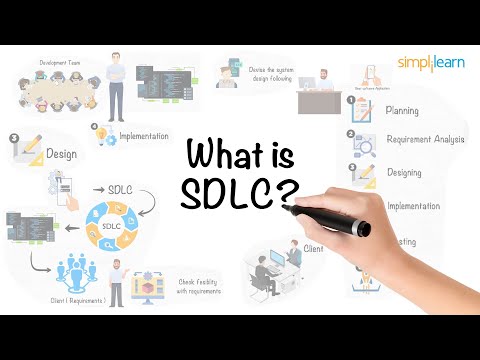
Application development is the systematic process of conceiving, specifying, designing, programming, documenting, testing, and bug-fixing involved in the creation and maintenance of applications. It spans the entire Software Development Life Cycle (SDLC), ensuring that the final product is not only functional but also resilient enough to handle real-world user traffic and data demands.
The scope of development has evolved significantly over the past decade. It now includes mobile apps, web-based software, cloud-native platforms, and integration-heavy enterprise systems. By following a structured approach, developers can mitigate risks, improve code quality, and ensure that the final product addresses the specific pain points of the intended user base.
Key Features of High-Performing Applications
A successful application is built on a foundation of reliability, security, and intuitive design. When planning your project, it is important to prioritize features that provide inherent value to the user while maintaining technical robustness. Features such as offline capabilities, real-time data syncing, and multi-factor authentication are no longer just “nice-to-haves”—they are industry standards.
- User-Centric Design (UI/UX): Ensuring the application is intuitive and reduces the learning curve for new users.
- Scalability: The ability for the application to handle increasing numbers of concurrent users or data loads without performance degradation.
- Security Protocols: Implementing end-to-end encryption, regular penetration testing, and robust access controls.
- API Integration: Allowing the application to communicate seamlessly with third-party tools like CRM, ERP, or payment gateways.
- Cross-Platform Compatibility: Ensuring a consistent experience across desktop, tablet, and mobile devices.
Core Benefits of Custom Software for Your Business
Investing in custom application development offers significant advantages over off-the-shelf software, primarily because it is tailored precisely to your internal workflows. While mass-market tools often come with unnecessary features that can clutter the interface, custom applications focus strictly on what your business needs to be more productive.
Furthermore, custom development provides competitive differentiation. If your workflow is more efficient than your competitor’s due to a faster or more intelligent application, you gain a tangible advantage in the marketplace. You maintain full ownership of the intellectual property, allowing you to monetize the software or pivot your business model without being beholden to the licensing agreements of a third-party vendor.
Comparing Approaches: Standard vs. Custom Development
Choosing between an existing solution and a custom-built one is a critical decision. The following table highlights the factors that typically influence this choice, helping you evaluate whether your needs align better with off-the-shelf software or bespoke engineering.
| Feature | Off-the-Shelf Software | Custom Application Development |
|---|---|---|
| Cost | Lower initial subscription cost. | Higher upfront investment. |
| Customization | Limited to vendor settings. | Fully tailored to your process. |
| Ownership | Licensed (you do not own it). | You own the proprietary code. |
| Support | Managed by the provider. | Self-managed or dedicated support. |
| Scalability | Depends on the vendor’s roadmap. | Engineered to your specific growth needs. |
Essential Steps for a Successful Workflow
Effective application development requires a standardized workflow to move from an idea to a live product successfully. This typically begins with a discovery phase, where project requirements and business goals are defined. Following this, the design team creates wireframes and prototypes, which serve as a blueprint for the engineers to build upon.
Automation plays a massive role in modern workflows. Utilizing CI/CD (Continuous Integration and Continuous Deployment) pipelines allows teams to test and deploy code updates frequently and safely. By automating repetitive tasks like unit testing and deployment, development teams can focus on writing high-quality features rather than manually managing server environments.
Common Use Cases for Custom Apps
Custom software is not just for tech startups. Industries ranging from healthcare to retail are increasingly using app development to drive efficiency. For example, a logistics company might build a custom tracking portal for clients, while a clinic might develop an internal patient management dashboard to improve record-keeping and compliance.
Common scenarios include, but are not limited to, the following:
- Automating manual administrative tasks to reduce human error.
- Creating private client portals to enhance communications and transparency.
- Building internal data analysis tools that synthesize information from fragmented sources.
- Developing mobile interfaces for field employees who need access to company systems on the move.
Budgeting and Pricing Considerations
Pricing for application development is rarely “one-size-fits-all.” It is driven by the complexity of the feature set, the platforms involved, and the speed to market. When budgeting, it is important to remember that the total cost of ownership goes beyond the initial development phase. Ongoing maintenance, cloud hosting costs, and future feature enhancements should all be factored into your long-term planning.
Always beware of under-budgeting for initial development, as this leads to “technical debt”—a scenario where the software is built quickly but requires expensive refactoring later. It is almost always more cost-effective to invest in a stable, well-architected foundation during the start of the project than to fix performance and security issues after the app has launched.
The Importance of Support and Maintenance
The lifecycle of an application does not end at deployment. In fact, that is when the real work of monitoring and optimization begins. Reliable applications require regular updates to support new operating system versions, security patches to protect against evolving threats, and periodic database migrations to improve speed.
Support is a key indicator of a software’s lifespan. Whether you manage this in-house or hire a dedicated team, having a clear roadmap for maintenance is essential. Establishing a cadence for auditing your codebase and reviewing performance metrics will ensure that your business-critical applications remain agile and secure for years to come.
Leave a Comment
Comments are closed.